
An exhibition for a non profit called Accelerating Circularity aimed at bringing awareness to the cause of recycled textiles.
Exhibition - The Cooper Union for the Advancement of Science and Art
May 2024
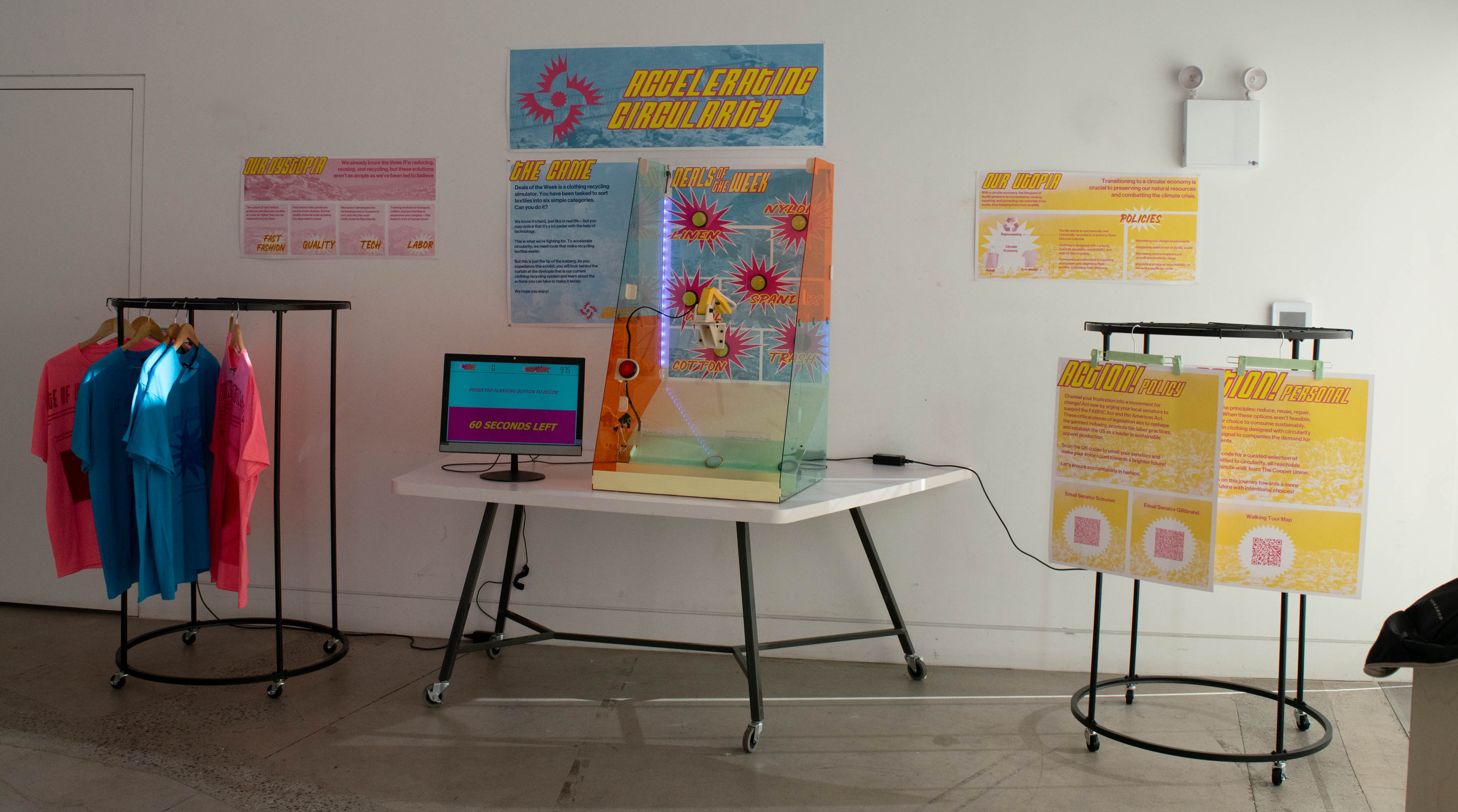
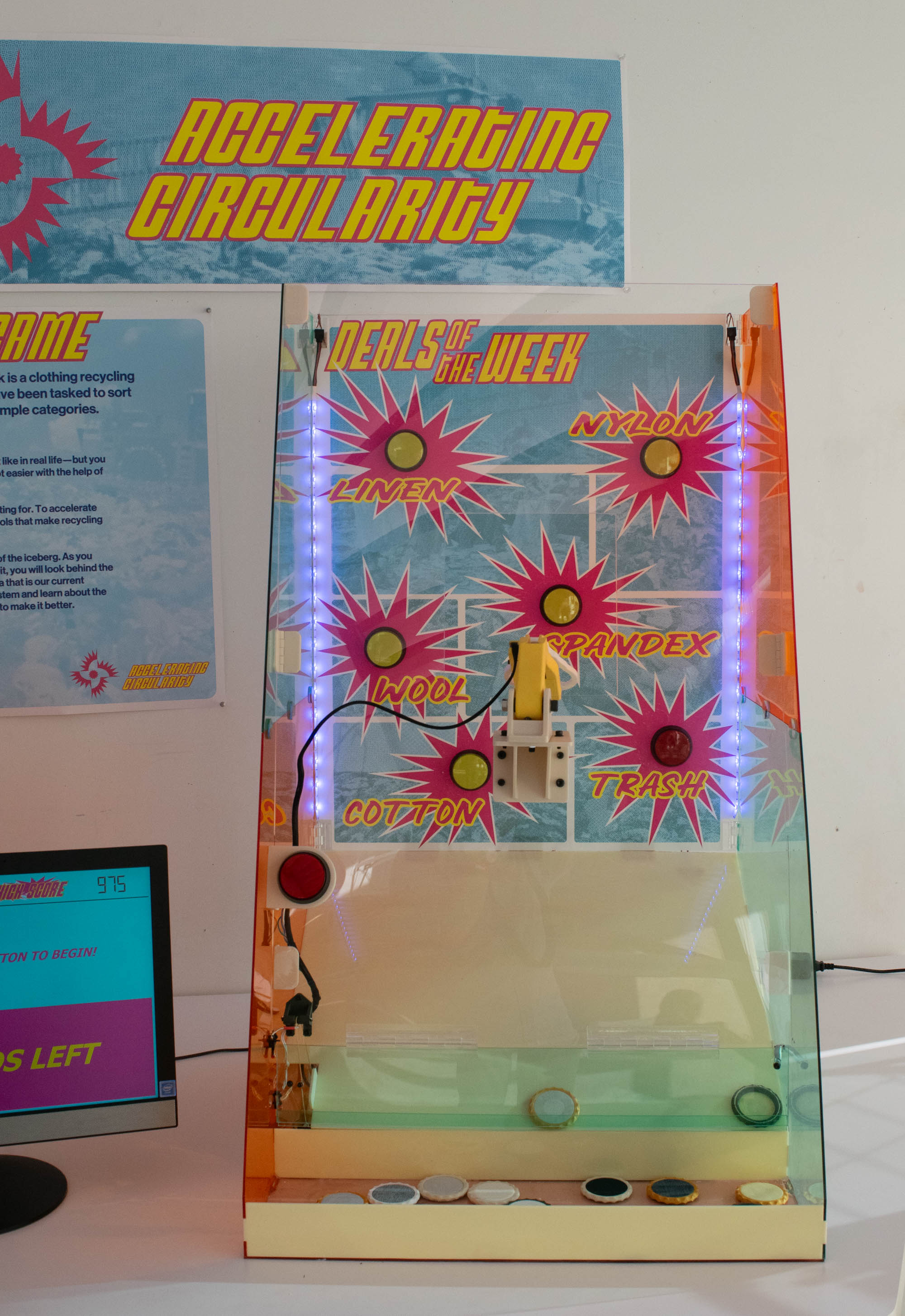
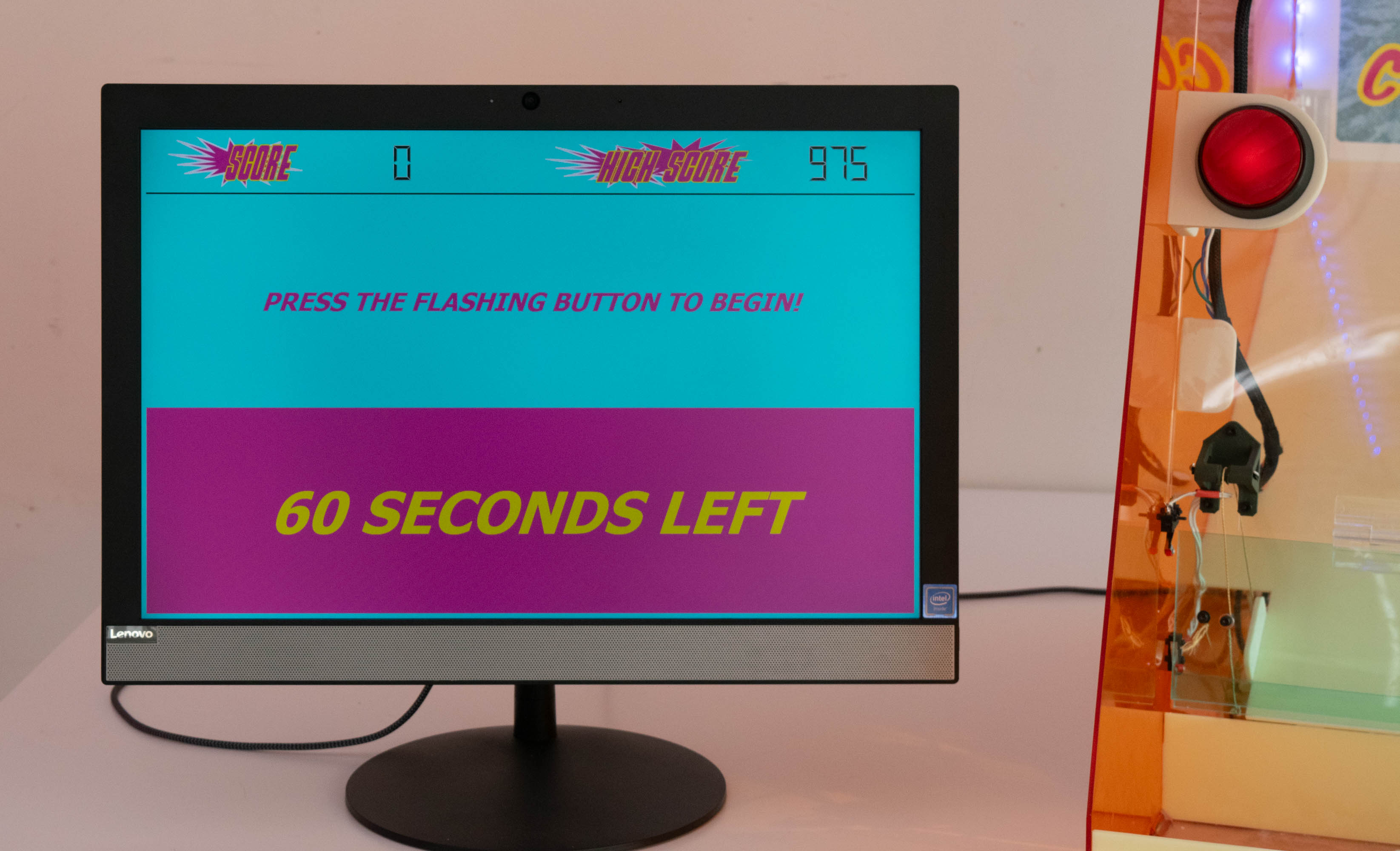
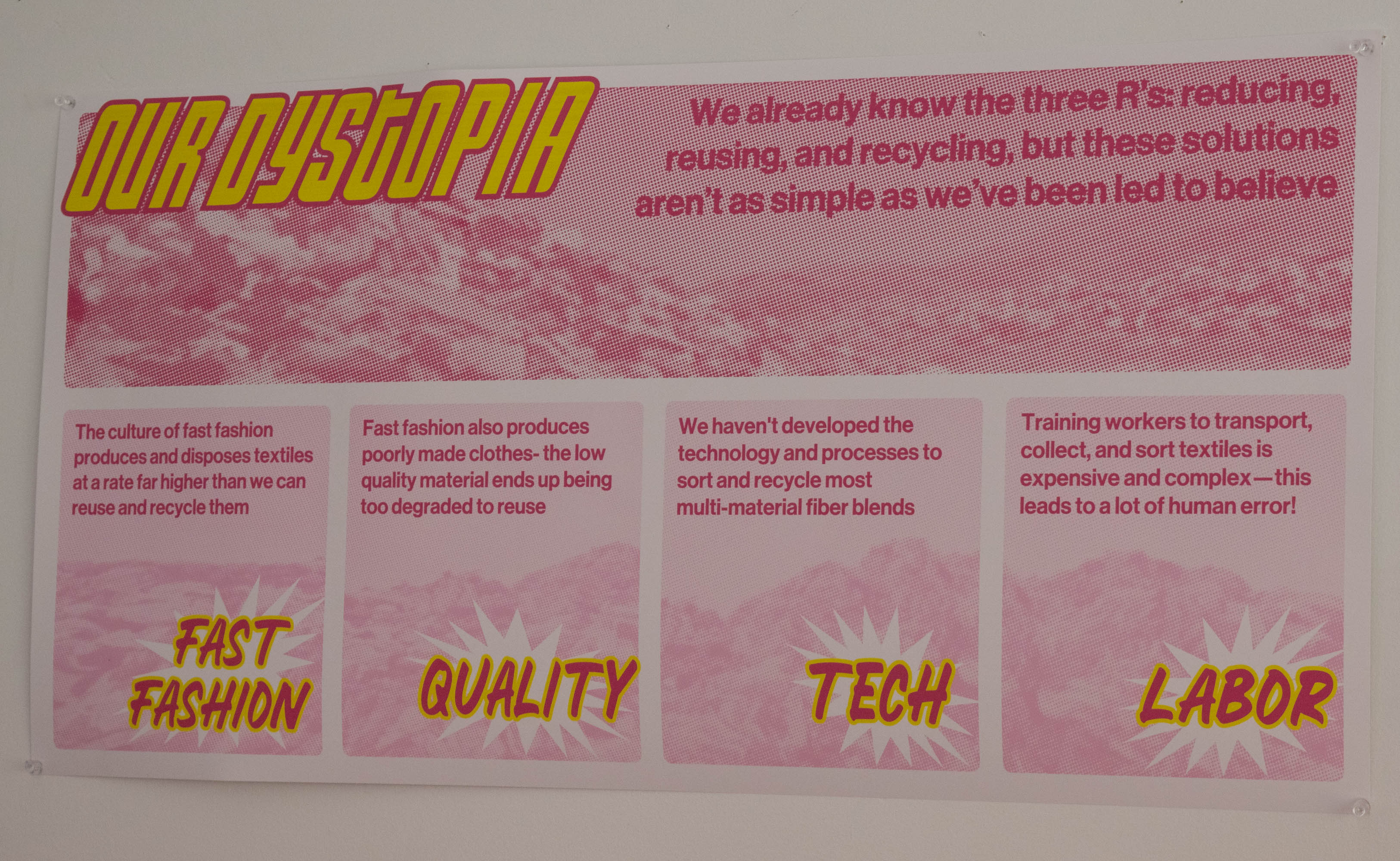
One of the main issues regarding textile recycling is the sorting process. Sorting is a highly skilled yet labor intensive job that unfortunately is not very profitable. It can take up to 3 years to train someone to be able to identify and sort fabric correctly and quickly.
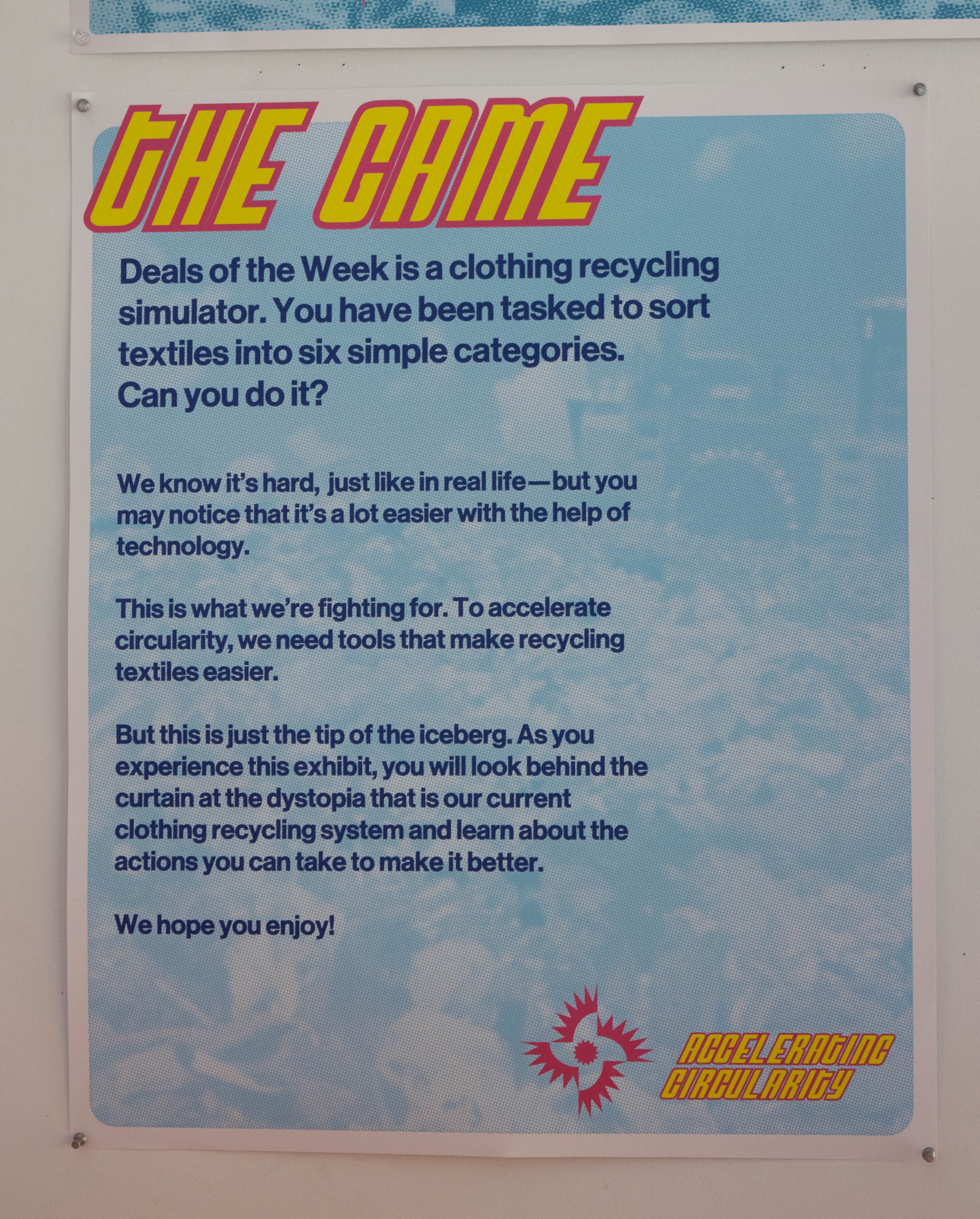
While the labels on clothes do state what they are made of, it is poorly regulated, and they are generally incorrect. My team and I created a game where the player picks up fabric disks and must launch them at the correct button. They get points for correctly sorted disks. Halfway through the game, it is revealed that there is actually an NFC chip in each fabric disk which is capable of telling the player what material the fabric is prior to them shooting it. This makes the game significantly easier.
Gameplay Video:
We designed and made dozens of fabric disks, each with an NFC chip hidden inside the fabric. The player has no idea the disks can be identified.
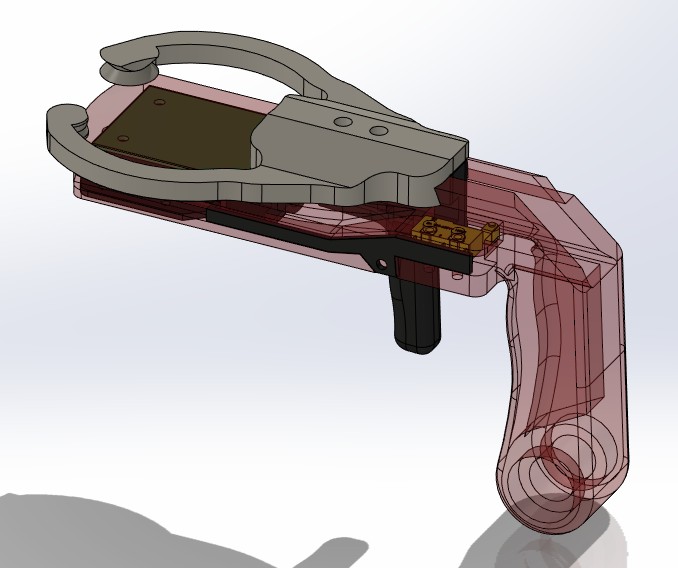
The launcher is custom designed. It has an RFID scanner built in that identifies which fabric was just loaded, and a microswitch that triggers at the exact moment the disk is launched. Both signals go to the microcontroller in the game housing, which scores the shot based on which button the disk hit, if any, and sends the result to the game UI on the computer.
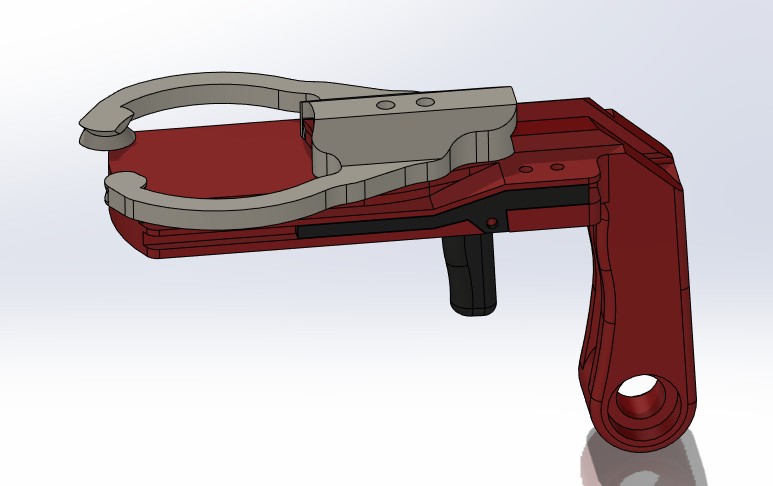

Halfway through the game, the machine reveals what fabric the player just loaded, before they even pull the trigger, by lighting up the correct button on the arcade machine. Sorting suddenly becomes easy, and scores go up a lot.
When the game ends, a servo opens a door that releases the captured disks back into the loading bay for the next player.
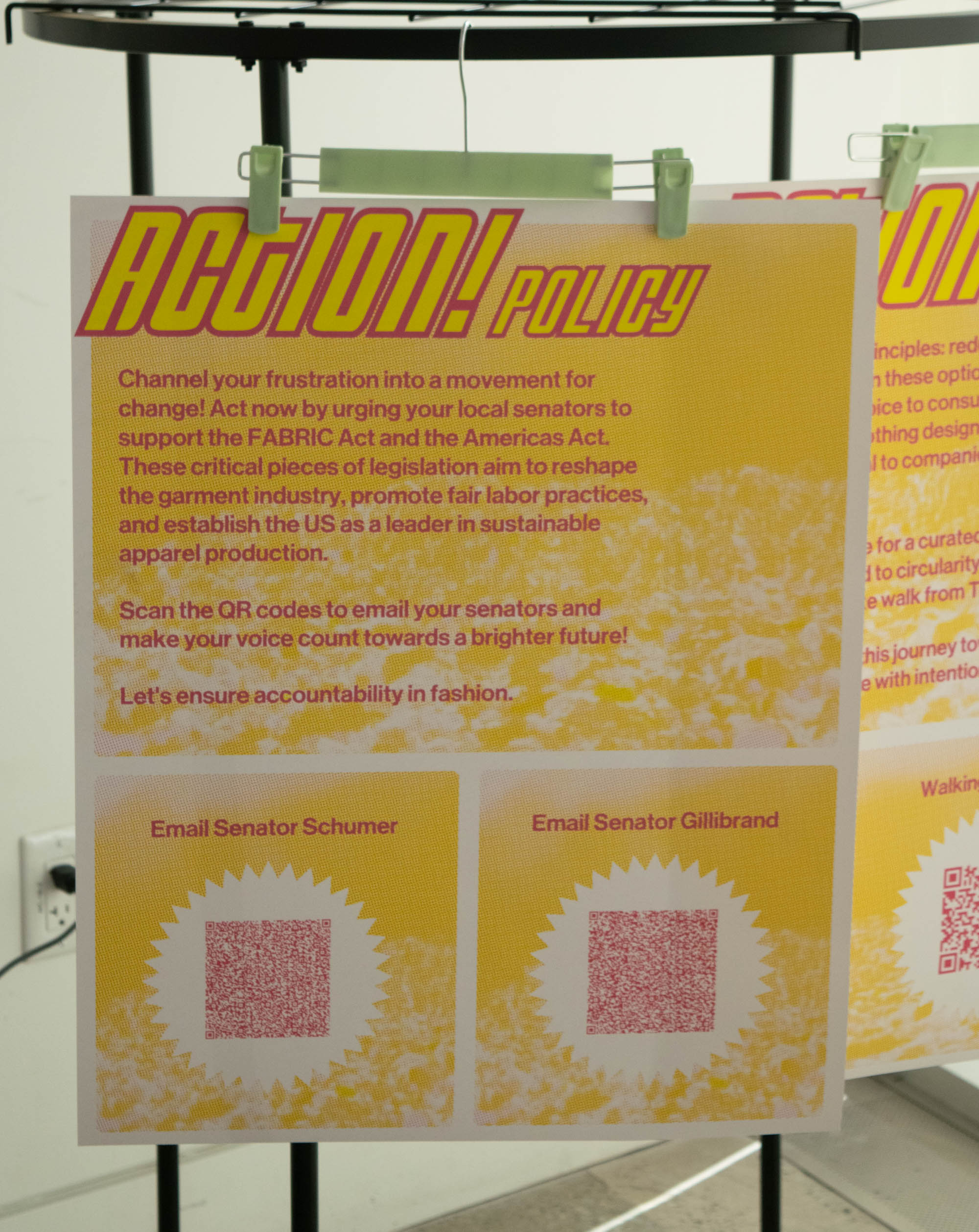
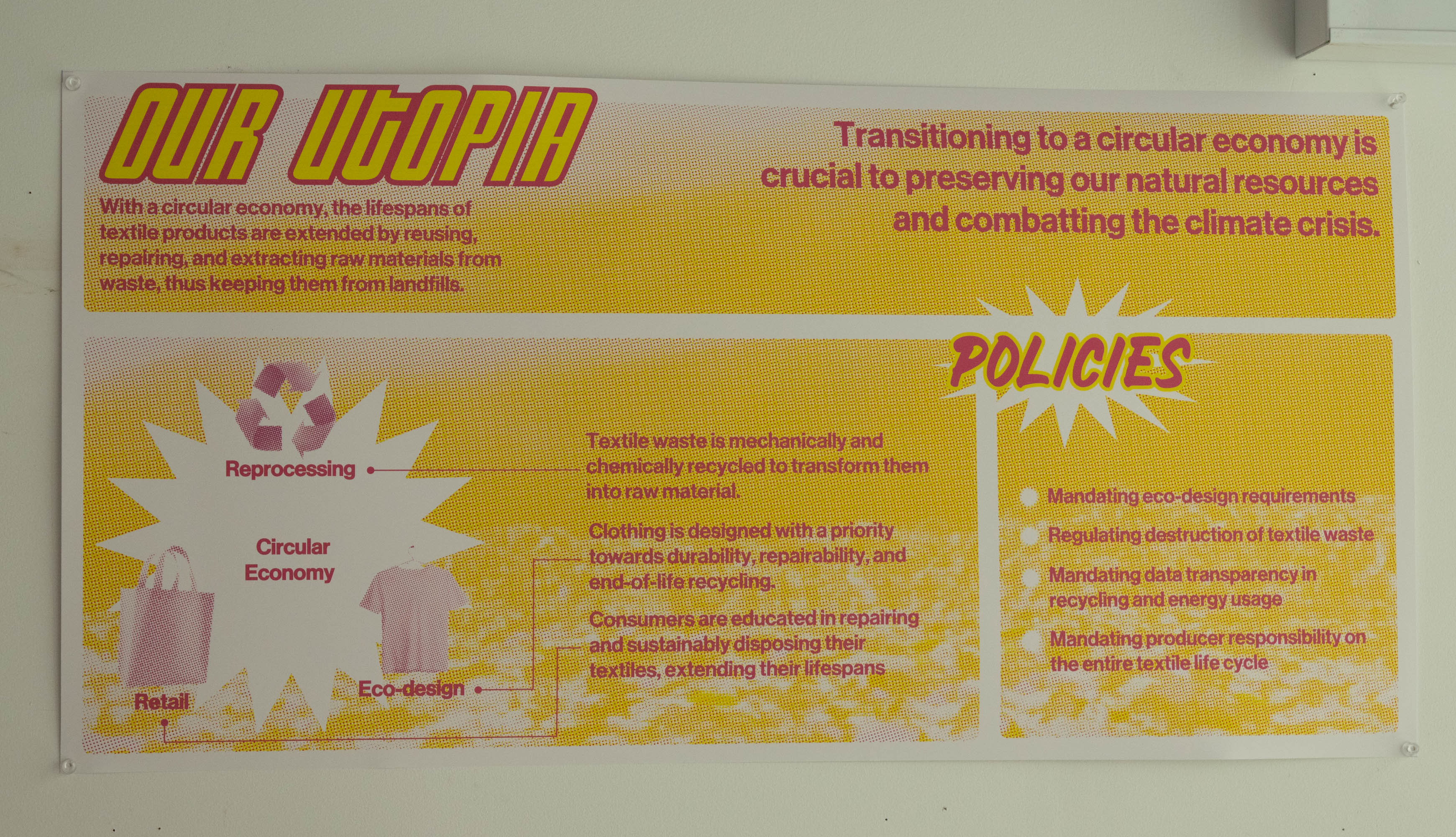
The point is that even though sorting fabric is still a huge challenge, technology and awareness can help solve it. For example, NFC tags in clothing could automate sorting, or standardized tags with QR codes could give a detailed breakdown of the materials and processes used to make each piece. It is up to people to push legislation that requires clothing companies to include this in their products.
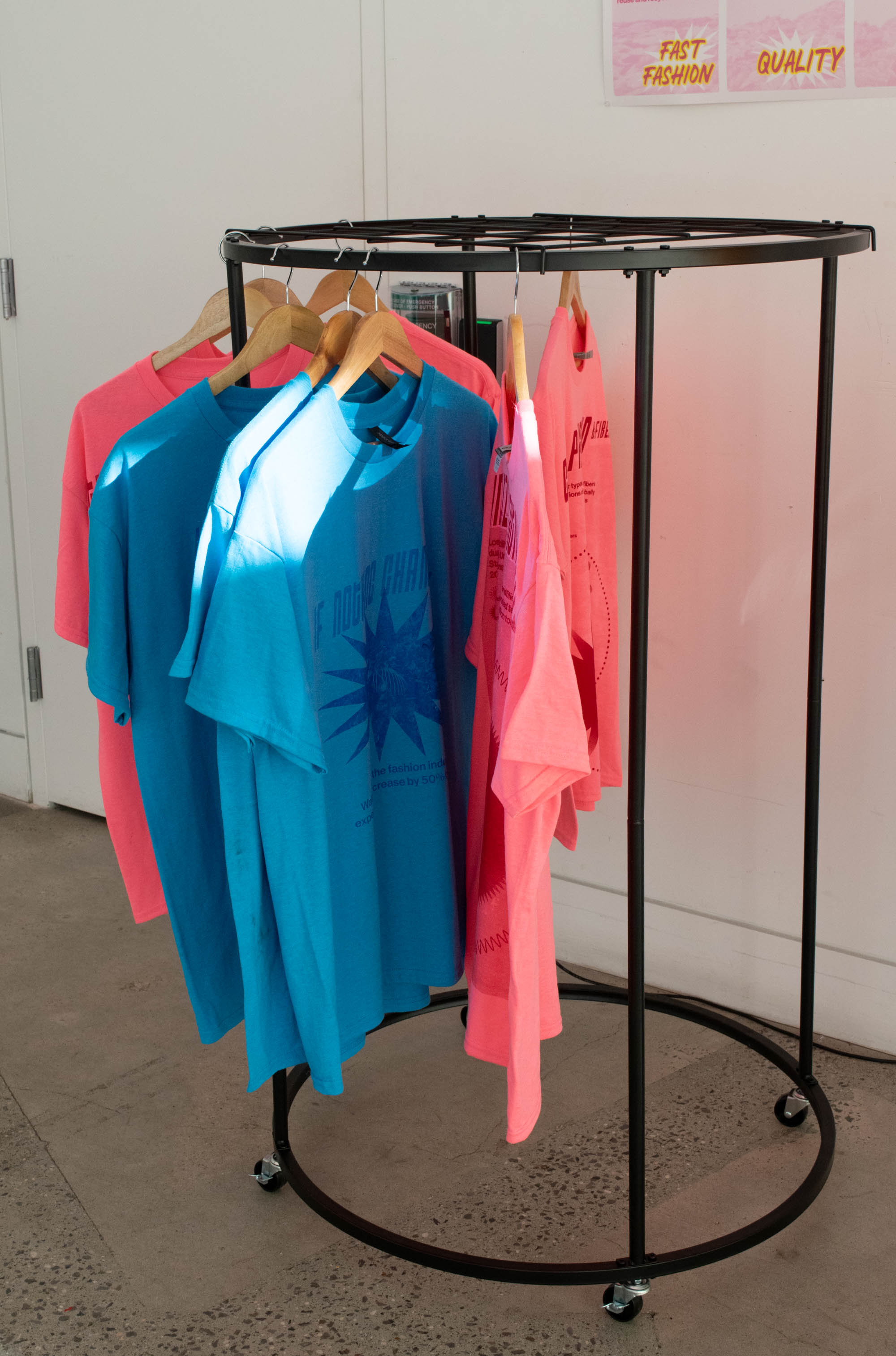
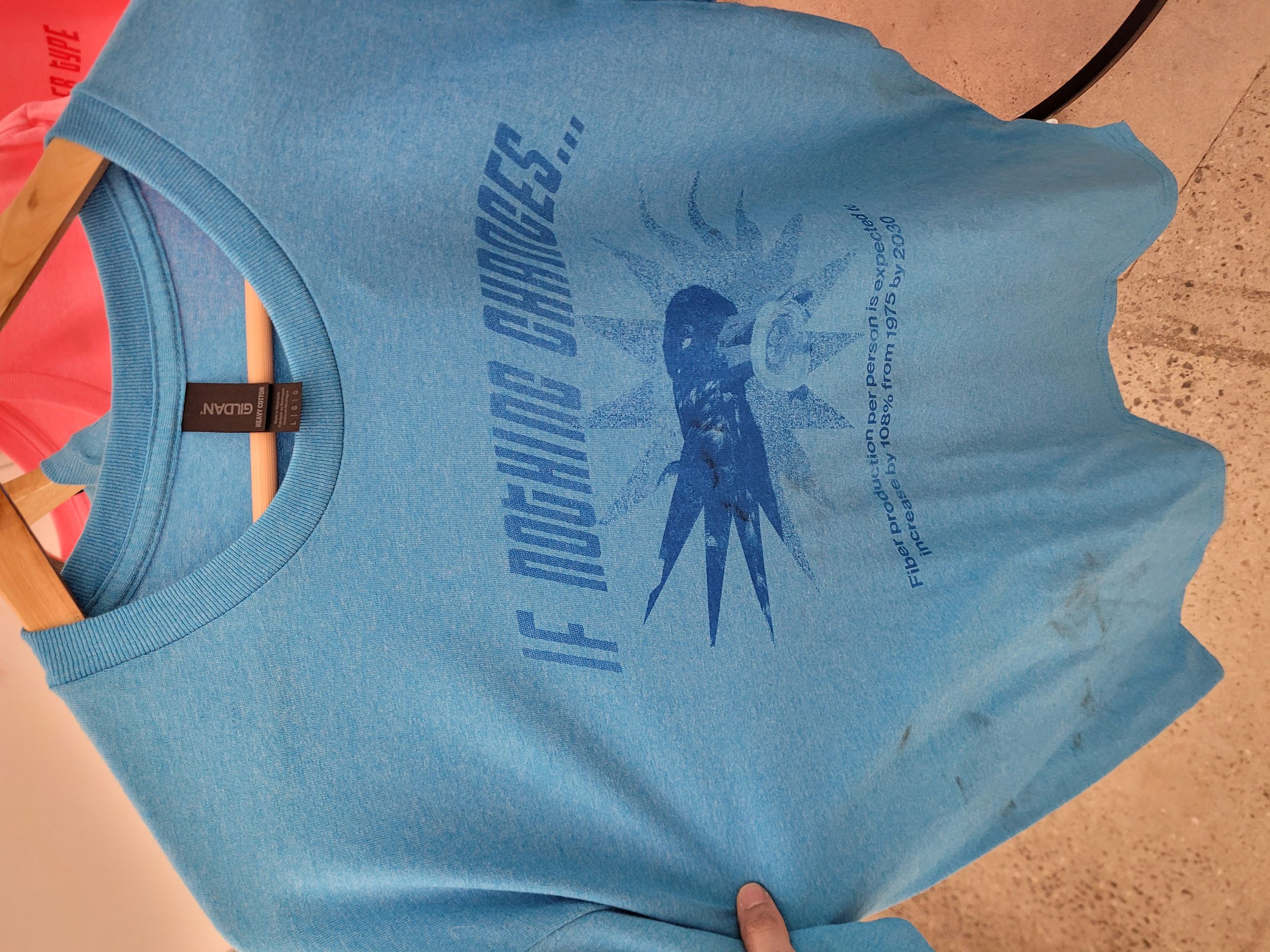
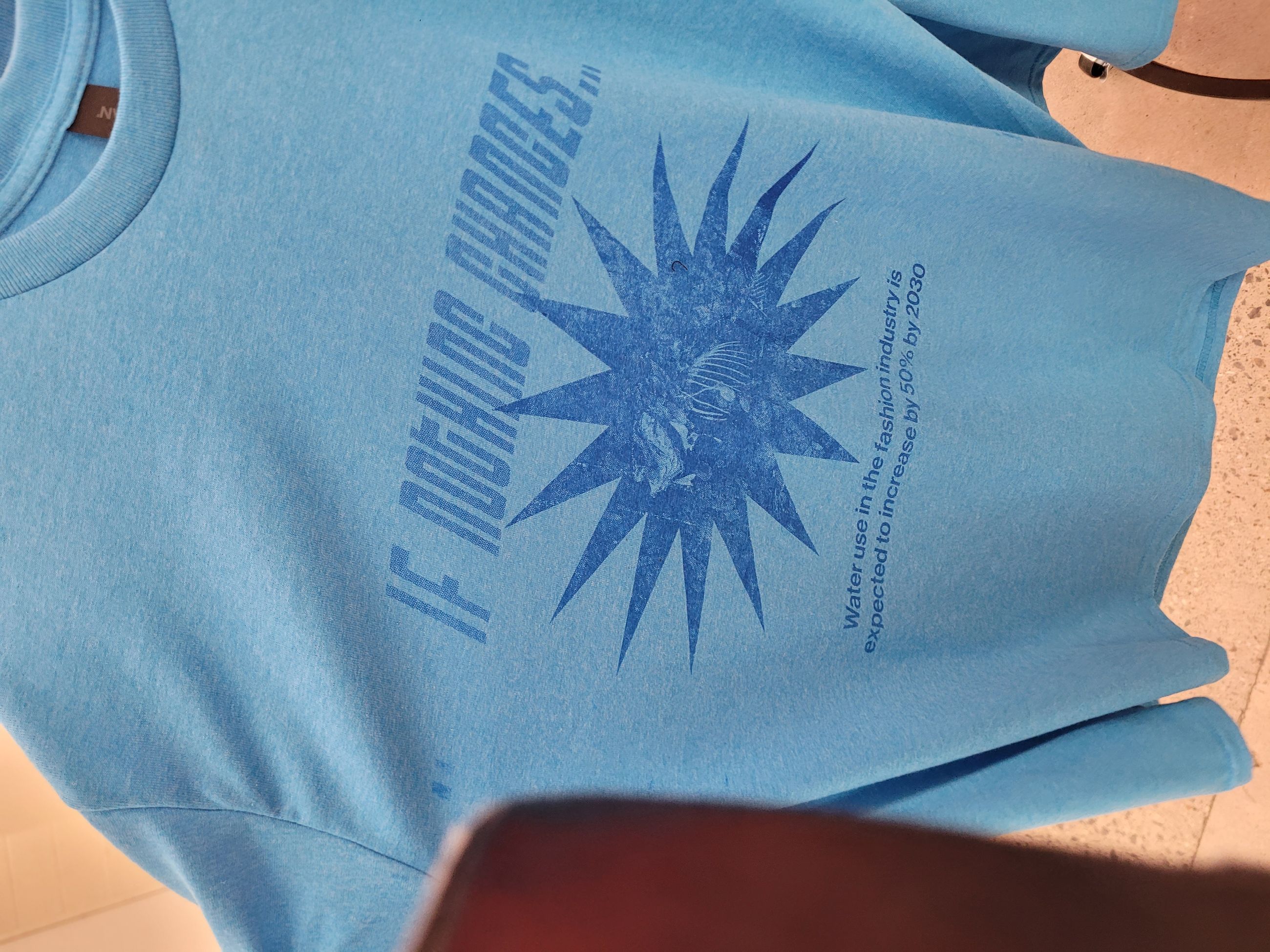
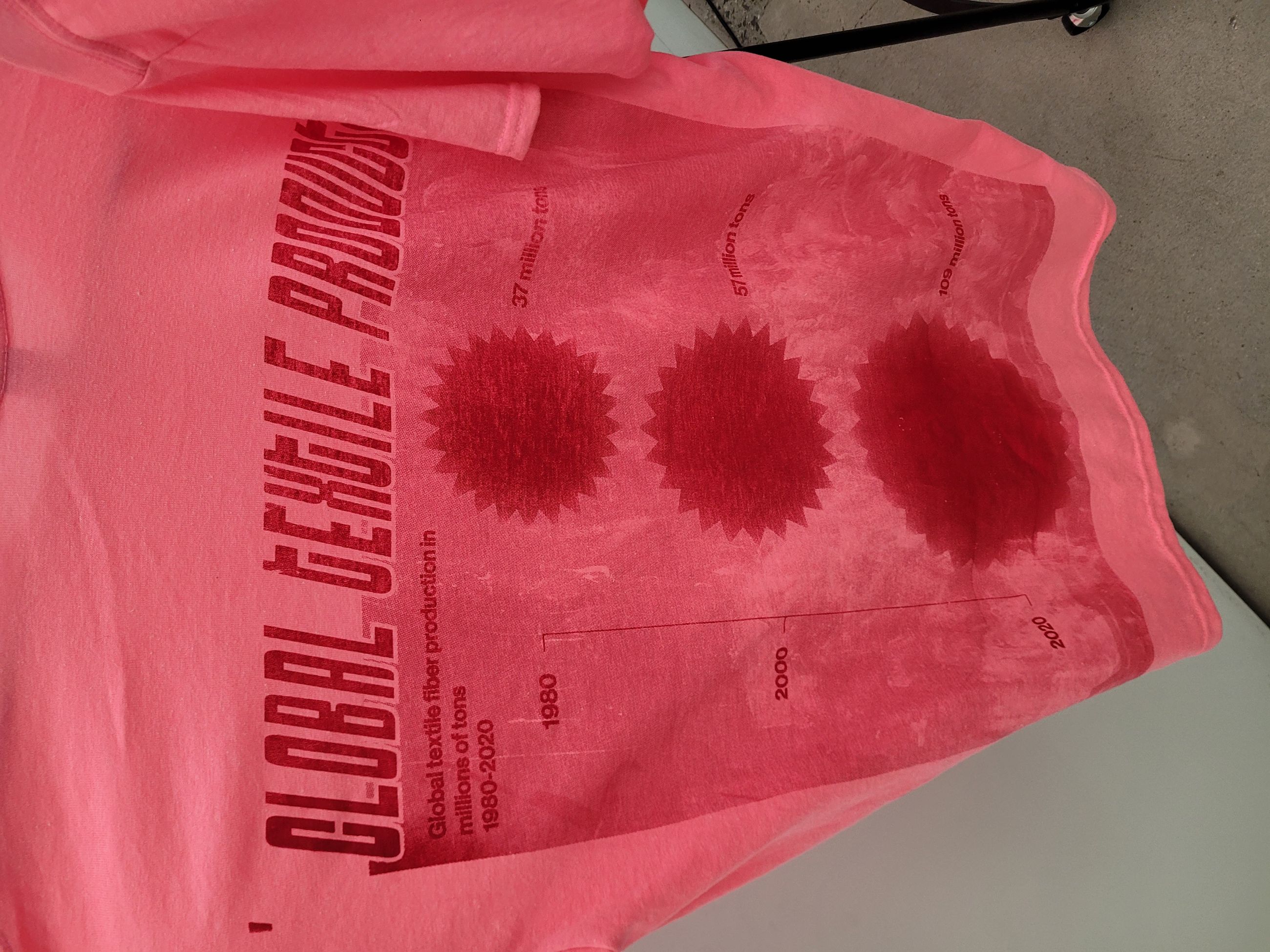
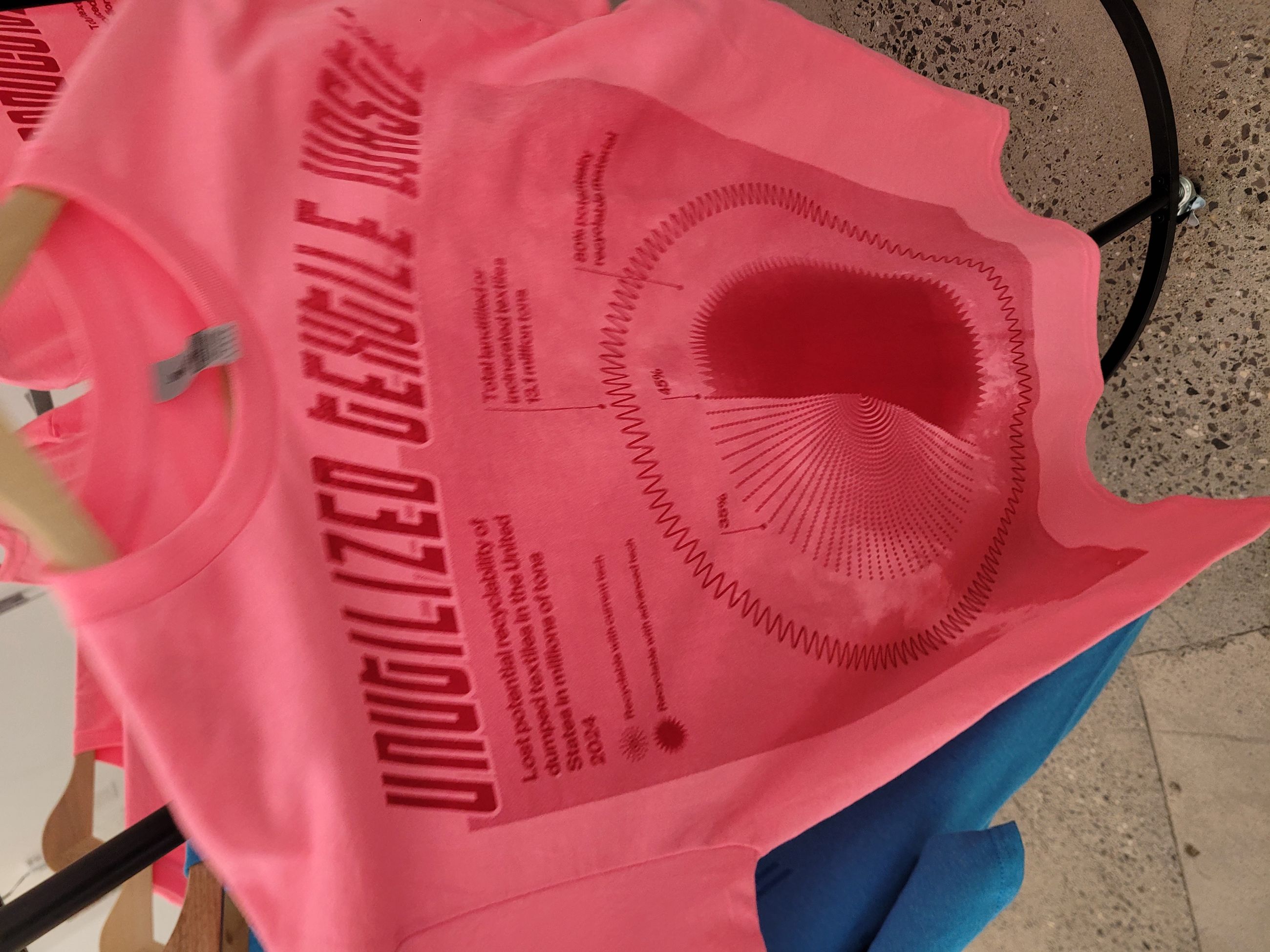
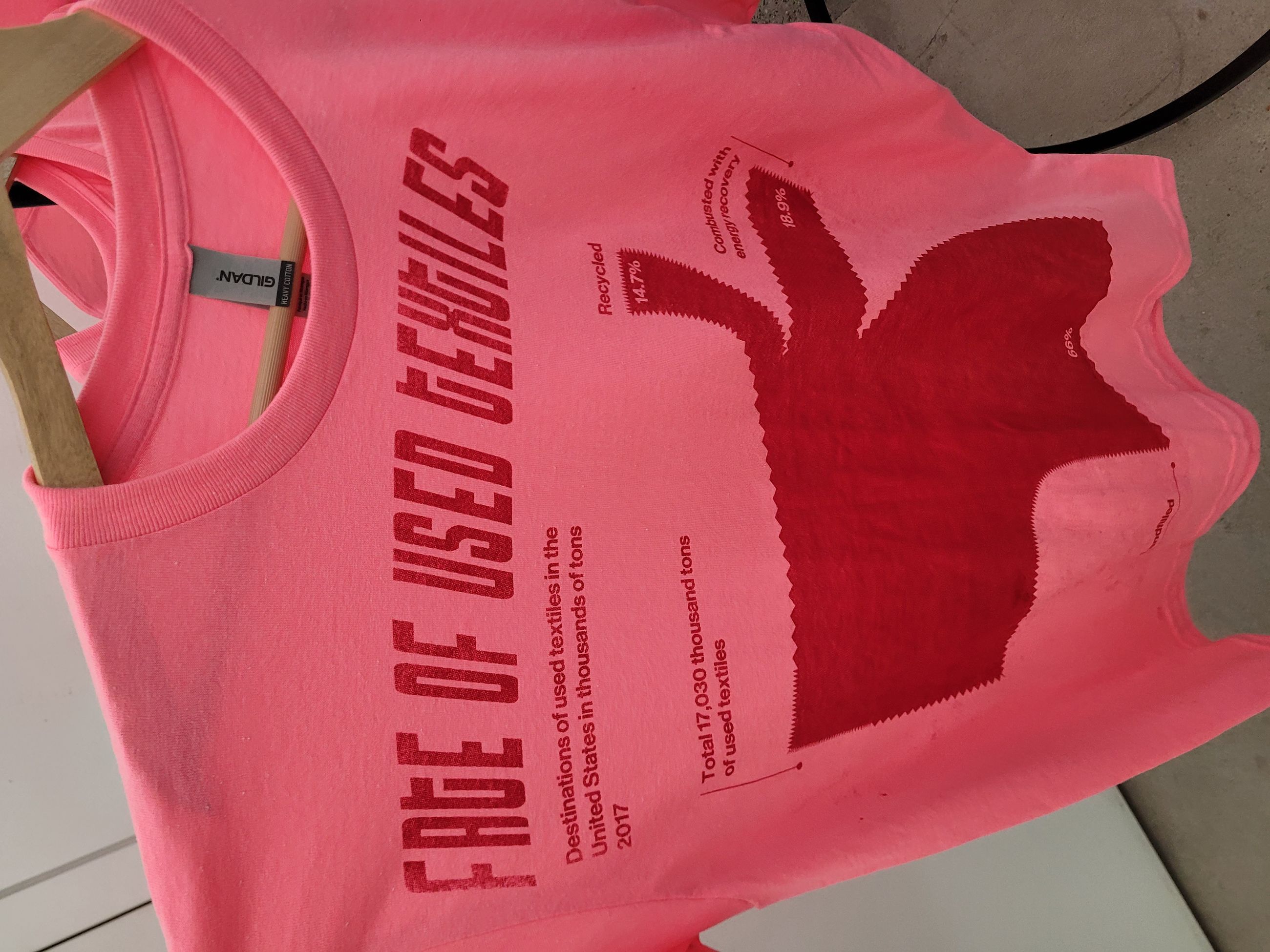
The surrounding shirts and posters contain data visualizations of the current state of textile sorting, and where it could be if changes were to be made. In addition, it pushes action on the viewers to contact lawmakers and clothing companies to enforce these changes.
More from this category.

